 GRAV-1Experimental
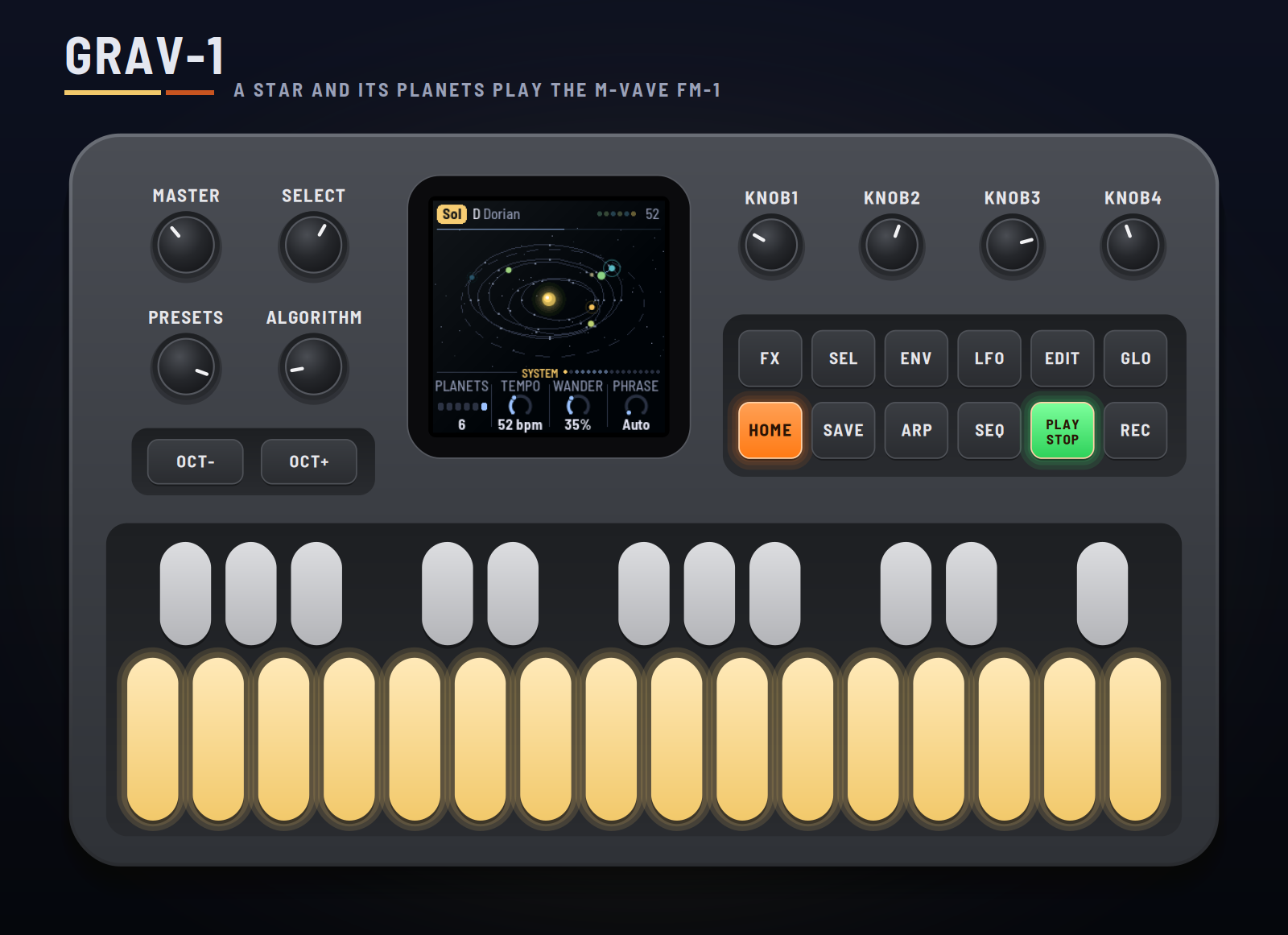
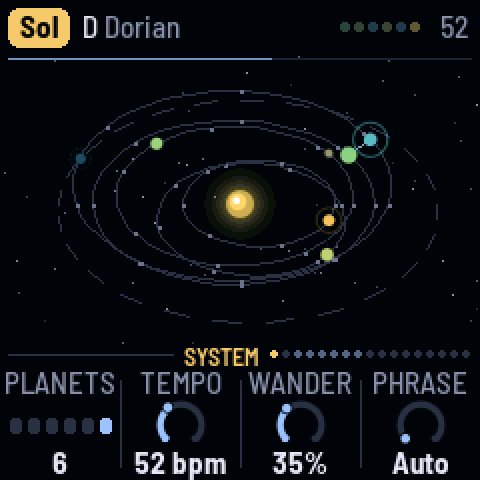
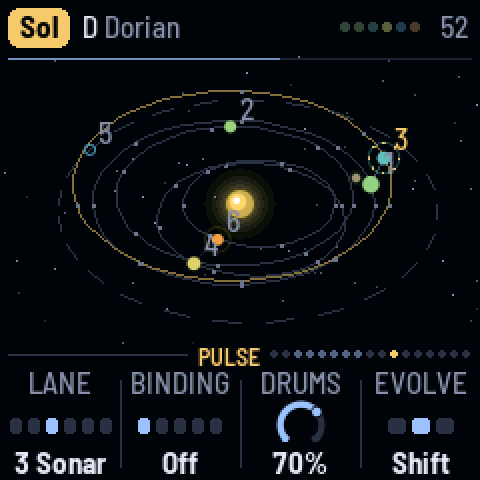
GRAV-1 turns the M-VAVE FM-1 into a small solar system that plays slow, dark, spacey ambient. A star in the middle hisses and roars in coloured noise. Up to six planets orbit it, each a voice that plays a short phrase as it goes round, warm and dry near the star, cold and wet far out. A drum sequencer sets their years, larger planets swell smaller ones as they pass, and dust clouds, asteroids and comets drift through.
The system
The star
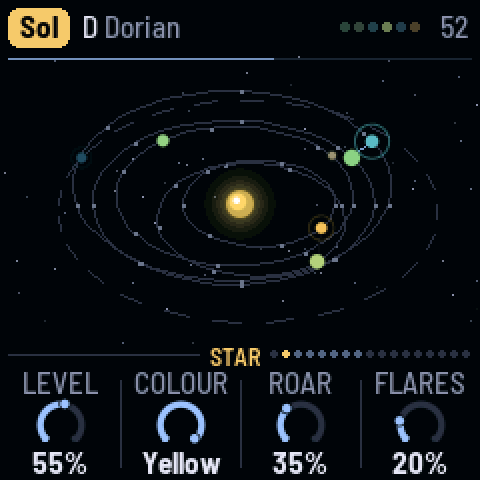
A bed of noise in eight colours, drawn in its own colour: a pink star for pink noise, a brown dwarf for brown, a blue giant, a crackling black hole. It roars now and then, and flares, never above its level.
Planets
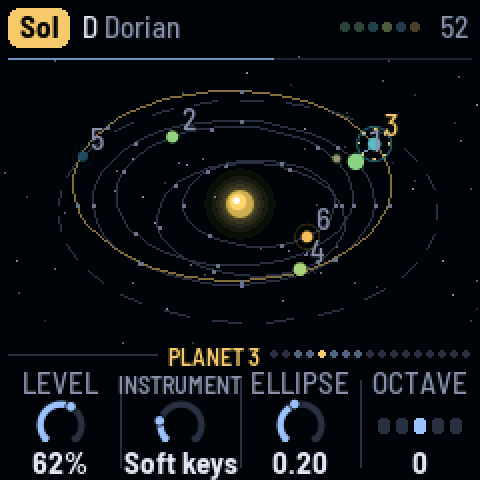
One to six voices from sixteen: Drone, Glass bell, Pluck, Soft keys, Choir, Laser, Ether, Ring hiss, and darker ones: Abyss, Dark choir, Cello, Gong, Toll, Whisper, Cold pad, Dusk organ. Each plays its phrase round its orbit, kept to the scale, a note or two changing every year.
Pulse
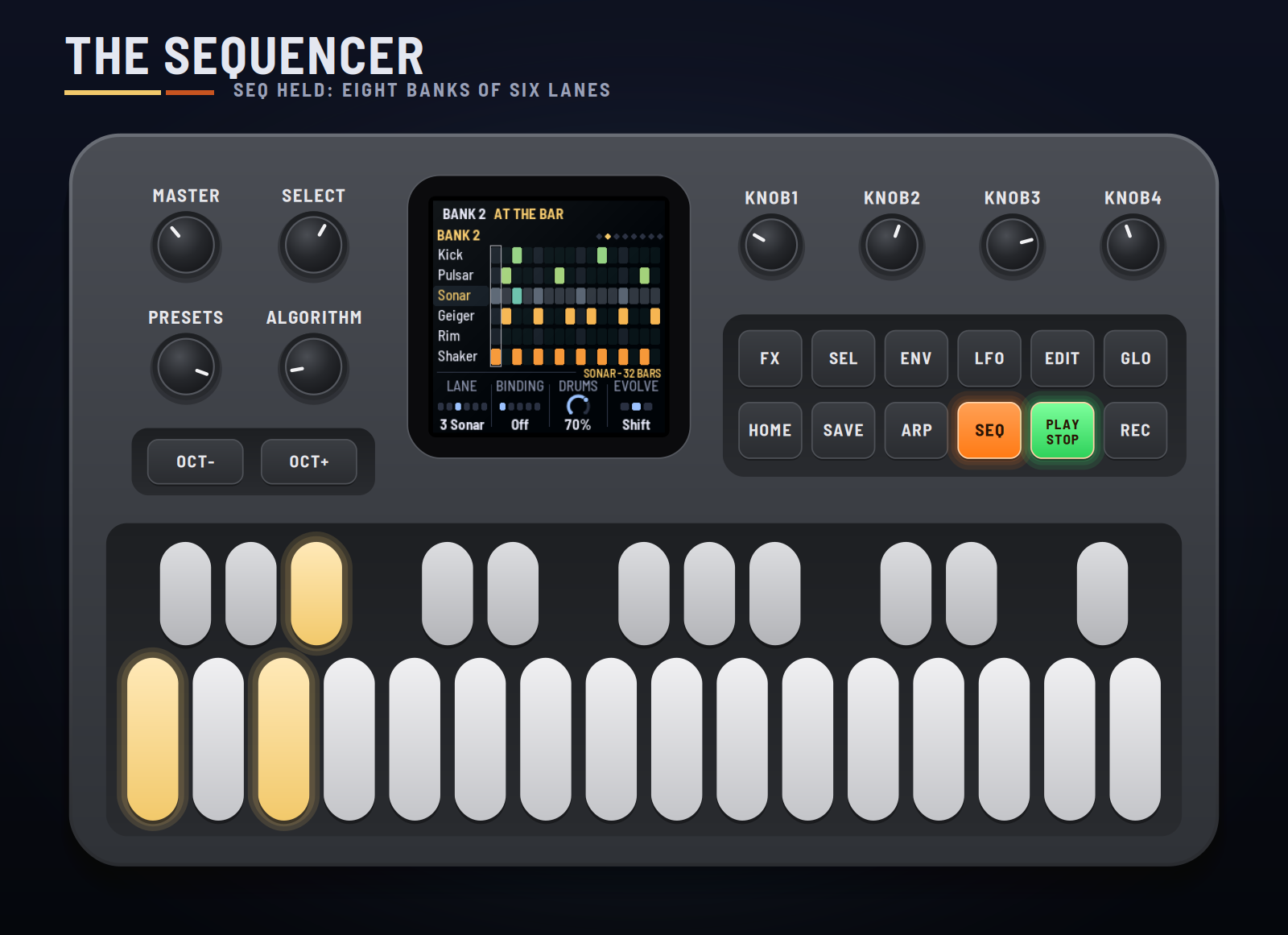
Six drum lanes (Kick, Pulsar, Sonar, Geiger, Rim, Shaker), one a planet. A lane's hits set its planet's year and, by Kepler, how close it orbits. A lane left empty leaves its planet dormant.
Gravity
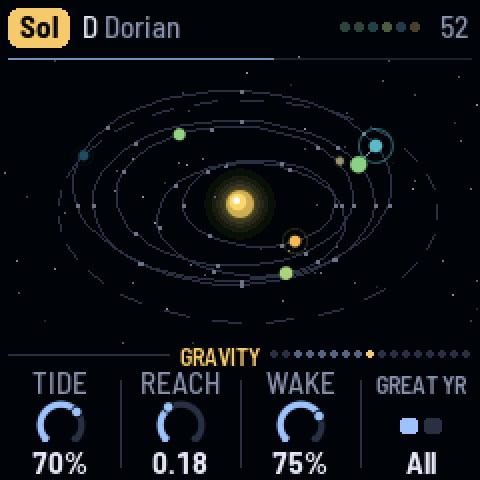
A bigger planet swells a smaller one as it passes, peaking at the closest approach. Dormant worlds wake only then. The outermost planet's year is the Great Year: the chord moves.
Weather
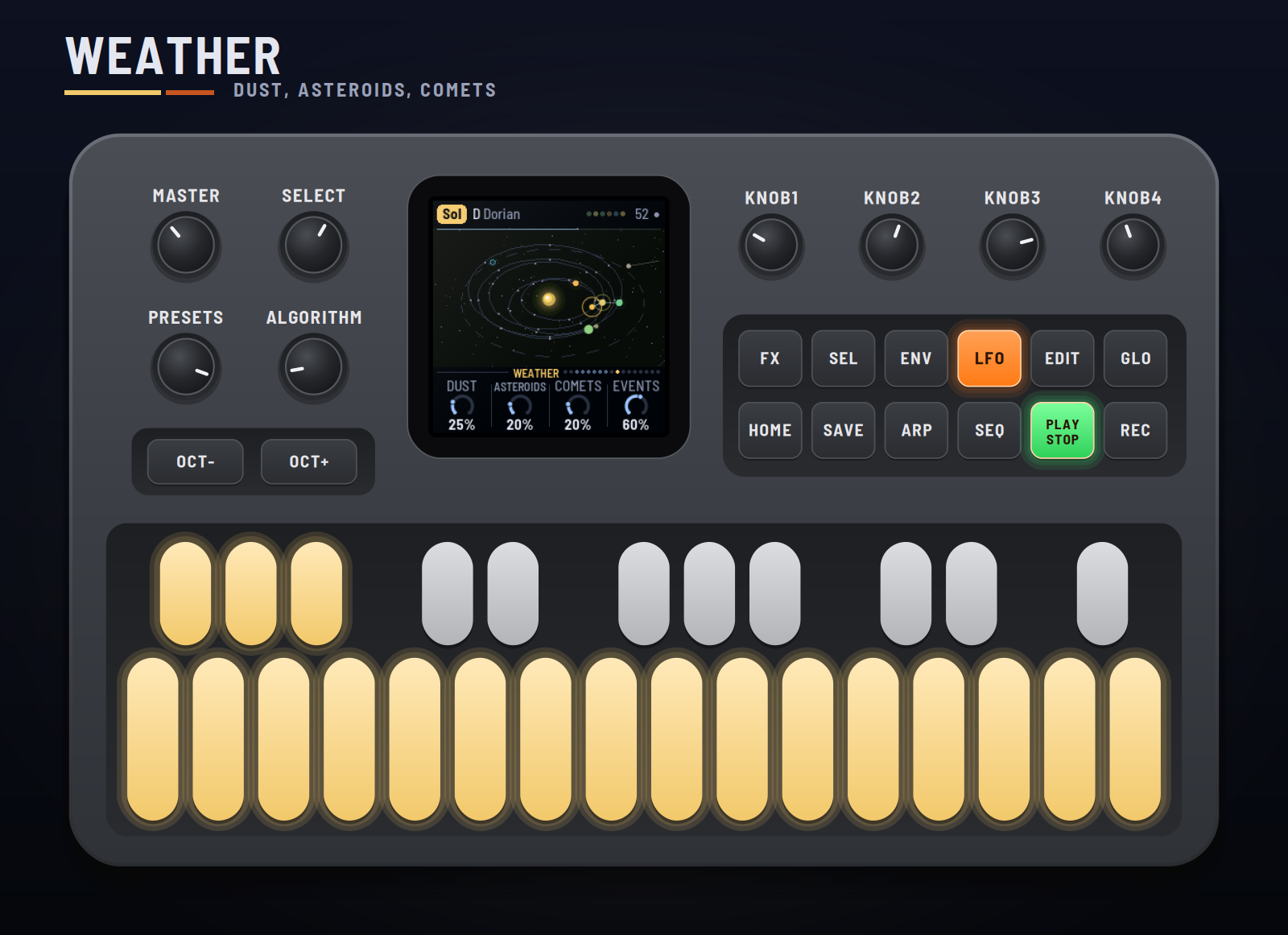
Dust clouds soften and warm the whole system, asteroids cross it pulling at the planets, and comets fall ringing into the star and burn up. Black keys 1–3 call them.
Space
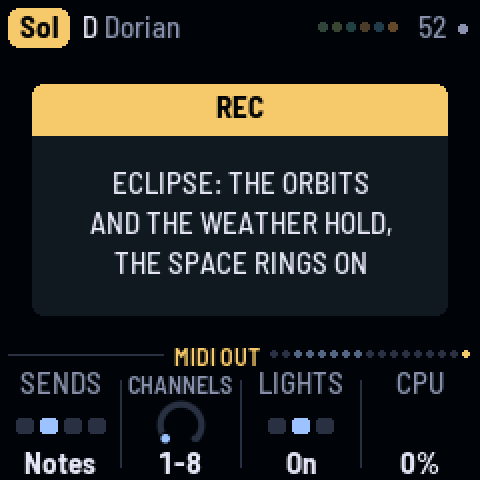
A dotted-eighth echo, Dattorro's plate, a radio of hiss and falling whistlers, and the stereo width the planets spread across.
Ten systems
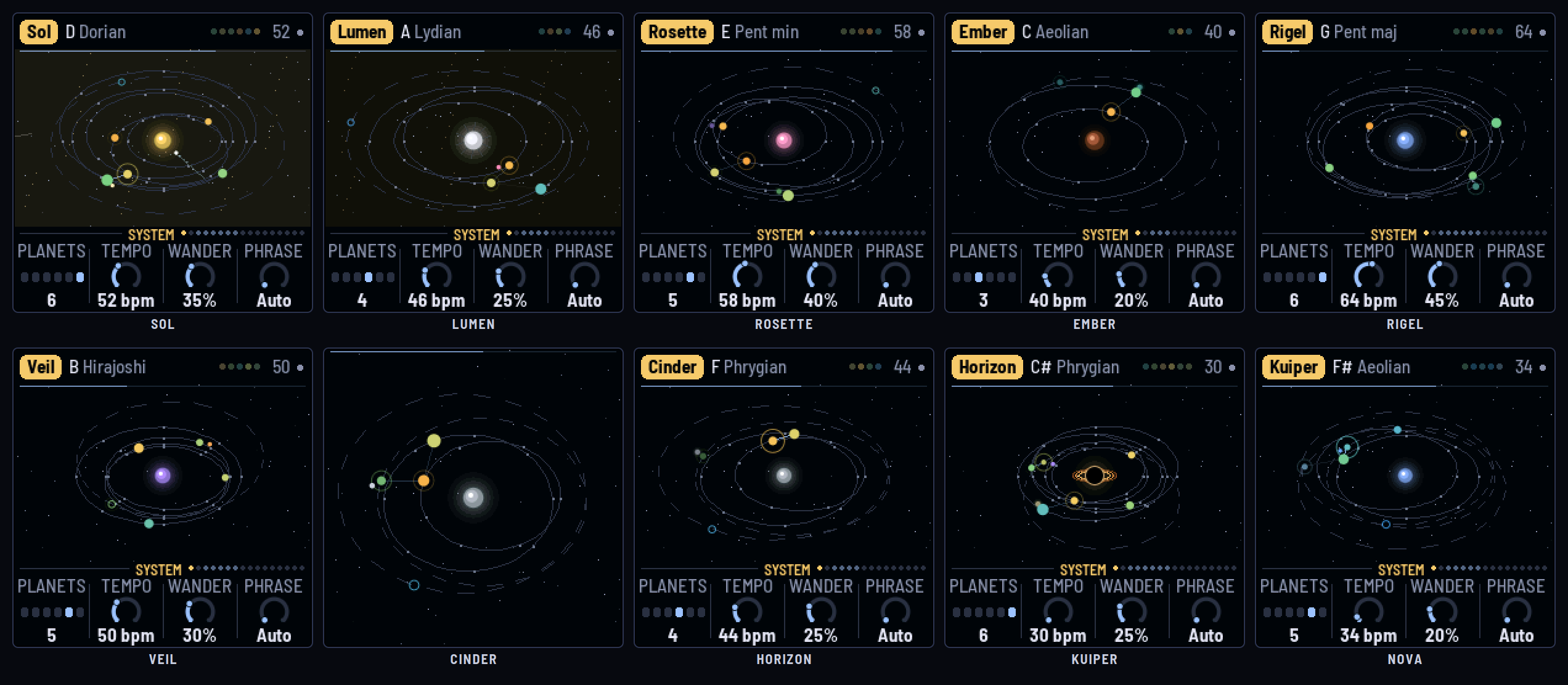
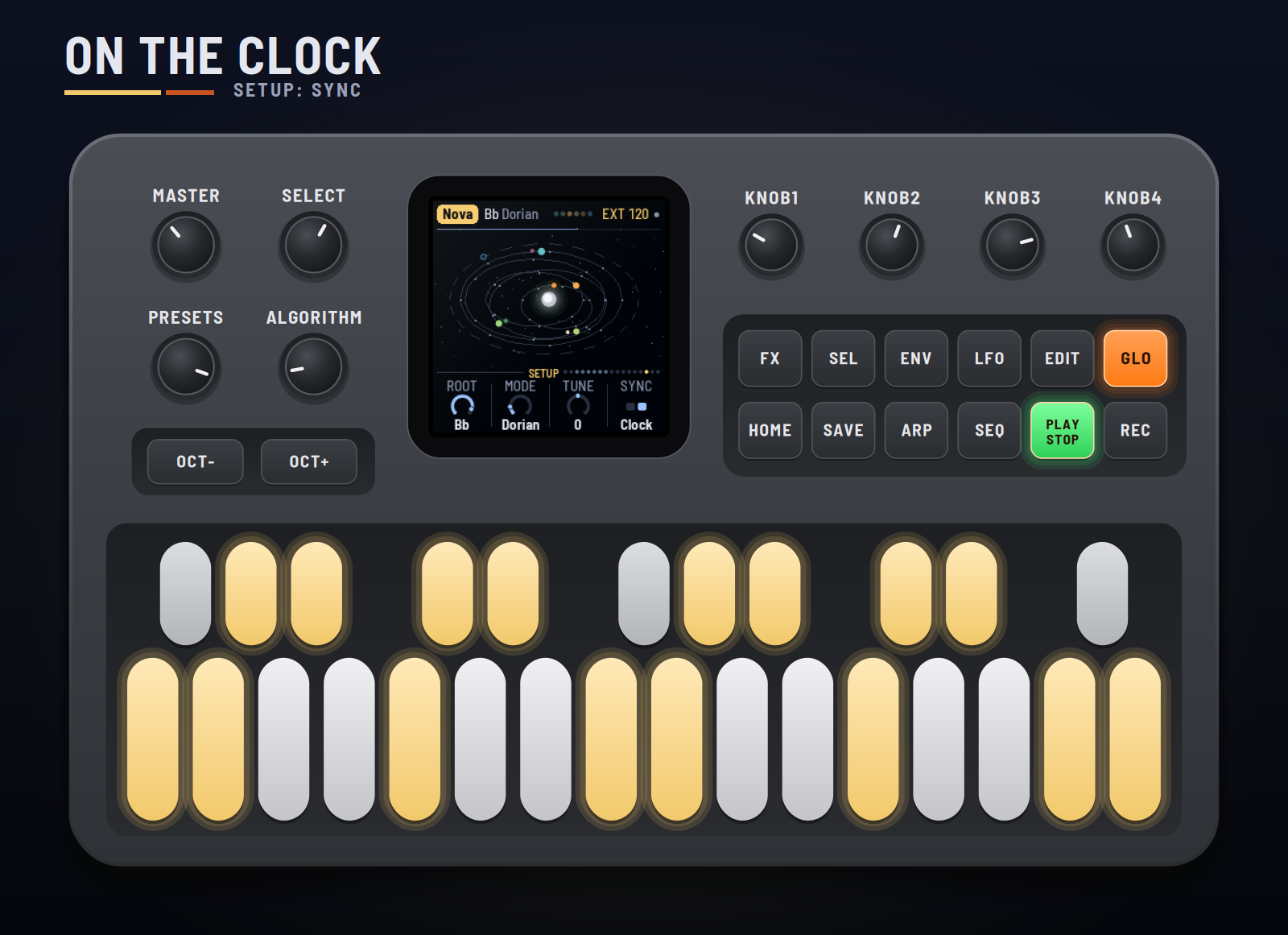
One for each of the star's colours and two more. Each keeps its own settings; SAVE on the Setup page keeps all ten.
Themes
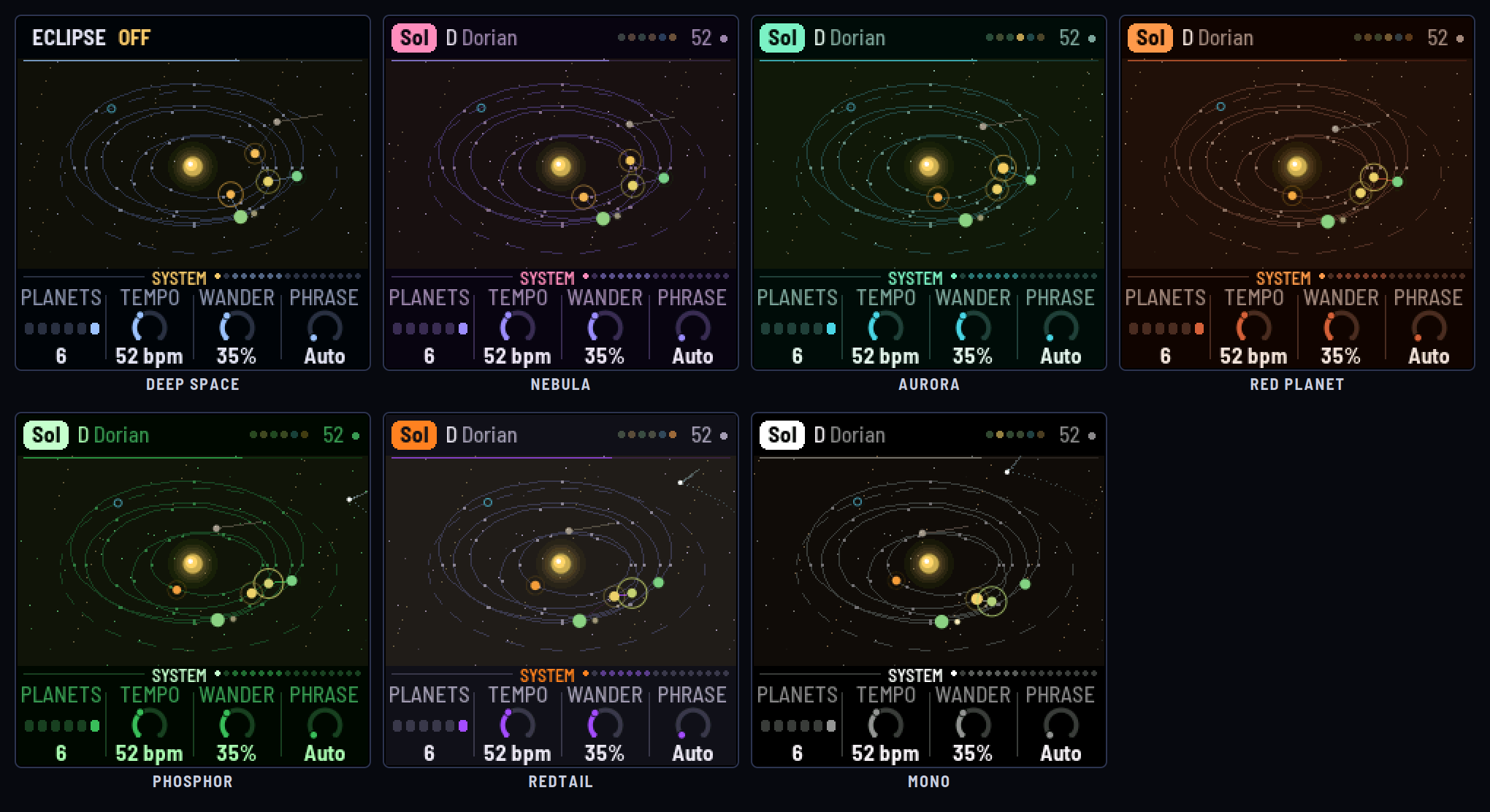
Seven screen themes on the Display page. The planets keep their warm-to-cold colours, molten near the star to ice far out, and the star its own.
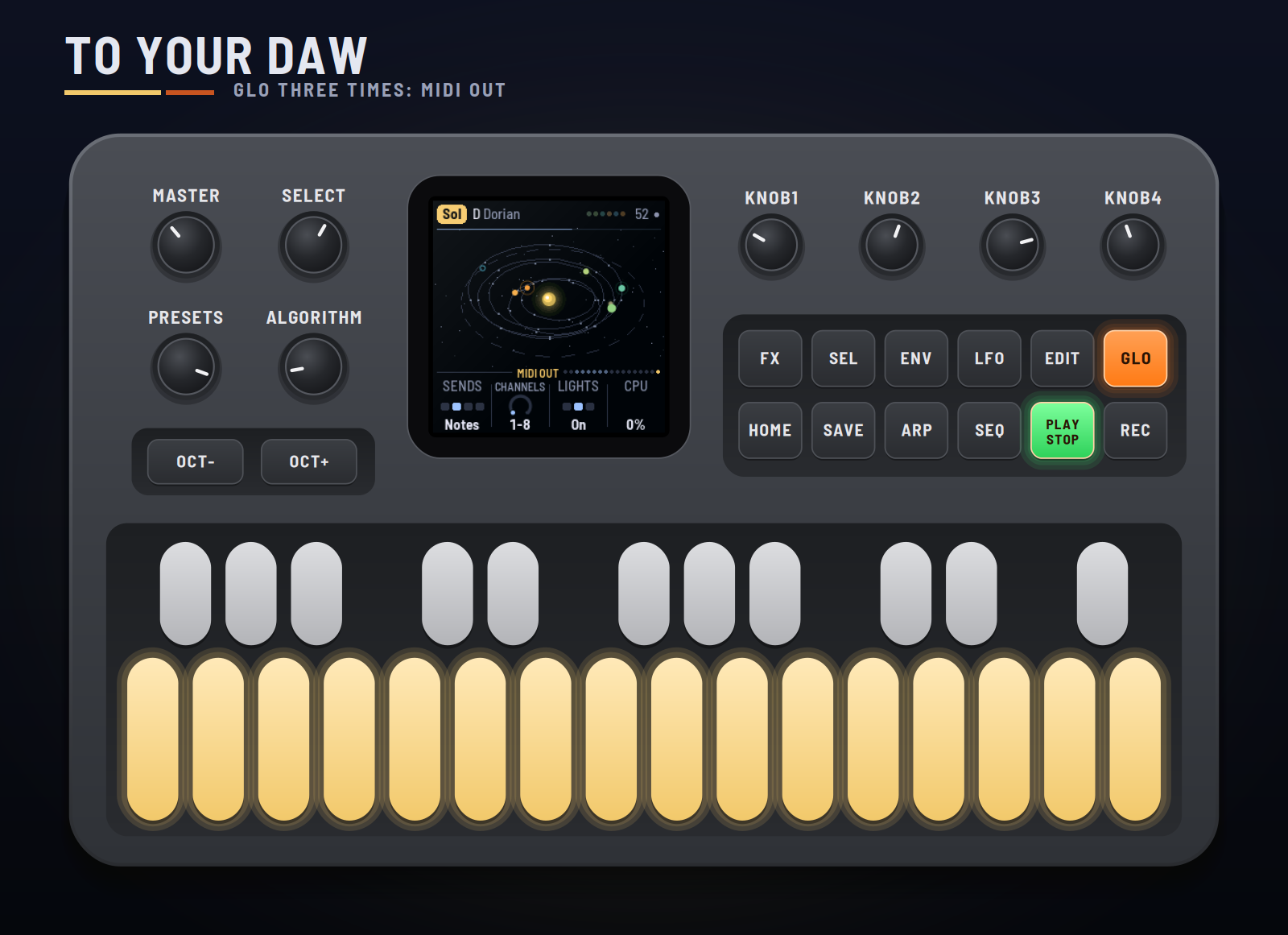
To your DAW
Screens

Credits
GRAV-1 is a fork of AMB-1 by Charles Vestal, by way of HYP-1 and ECO-1. The platform (USB, update loader, storage, installer) is Felucca by Leo Kuroshita (@kurogedelic), Hügelton Instruments. Screen font: Barlow Semi Condensed (SIL OFL). GPL-3.0. M-VAVE and FM-1 are trademarks of their owners; GRAV-1 is not affiliated with M-VAVE.
To go back to the official firmware, use the installer's "Back to the stock firmware", or M-VAVE's updater, M-UPGRADE. Installing firmware is at your own risk.